

Watch Your Back When You Lift!

Whether you are taking boxes down from the attic to decorate for the holidays, lugging boxes moving to a new home, or lifting regularly at your workplace, it is essential to watch your back. Improper lifting techniques can cause both short and long term back injuries. Learning to lift properly will help you accomplish your tasks while reducing your chances of hurting or disabling yourself.

Back injuries can be caused by a single defined instance or as the result of improper lifting techniques over time. Injuries can arise from damage to muscles, ligaments, vertebrae or vertebral discs. Back injuries account for a significant amount of human suffering and lost productivity. For individuals in their working years, back problems are one of the leading causes of disability. The economic impact of back injuries is expected to rise over the next several decades due to the aging population and growing healthcare costs.

Since back injuries result from exceeding the capability of the muscles, tendons, and discs, it is important to avoid lifting loads that are just too heavy for the back to support. Injuries can also occur due to a cumulative effect of contributing factors that include

  • Reaching while lifting
  • Poor posture or physical condition
  • Twisting or bending while lifting
  • Ergonomic deficiencies for job workstations
  • Sitting or standing for too long
  • Improper body mechanics for lifting, carrying, pushing or pulling objects

Be safe by planning ahead before you are going to lift anything. Being familiar with the area you are lifting in and knowing exactly where you are moving an item to can reduce the time your body is under the stress of lifting and prevent tripping due to obscured sightlines you may have while carrying a large object. If you will be lifting an item with another person, make sure you both agree on the technique and path beforehand.

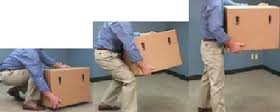
Lifting safely starts with getting a firm hold on the object, then bending your knees while keeping your back straight, and finally lifting with your legs. It is important to have a solid, stable base to lift from, so keep your feet shoulder width apart. While lifting, tighten your stomach muscles to support your back. If at any point the object is too heavy or your grip loosens, ask for assistance if available, and slowly guide the item down to a resting place.

If you do injure your back, visit your doctor or nearest Urgent Care Center for an evaluation. Certain medications and rehabilitation exercises can help reduce the number of days you are in pain, returning you to your normal activities sooner.


Cynthia Vanson, MD

Assistant Medical Director, Urgent Care of Connecticut.
Slowing It Down During the Holidays

The busy holiday season is getting into full swing! You may be feeling that urge to want to do everything for everyone else, but it is important to remember to make sure you are taking care of yourself. Since unmanaged stress can lead to many health issues, make it a personal goal to not overcommit yourself and avoid having stress negatively impact your holidays this year.

Accepting responsibility for the role you play in creating and managing the stress in your life is helpful when balancing time spent between work, home, and entertainment. Simplify your “to do” list, focusing on the most important tasks. Be realistic about what you can and cannot do. Making a plan for each individual week can help keep you organized and on target.Set a strict budget for spending on holiday gifts and stick to it. Write down what you want to purchase for each person, the budget amount, and where to buy it. Having a lot of debt to pay off after the holidays can increase stress levels significantly. Keep gifts simple and thoughtful.

When heading out to hit the stores, take a deep breath before you start driving and take it slow. Try to allot enough time at each stop to avoid feeling rushed. Rushing around and being distracted can lead to careless driving and ultimately increase your risk of getting a traffic violation or worse yet, being involved in a car accident.

These quick tips can also help tame holiday stress:

• Plan a Simple Holiday Menu
• Keep a Relaxed and Positive Outlook.
• Get Enough Sleep
• Exercise Daily for 30 Minutes or less
• Eat Balanced, Nutritious Meals
• Take a Break and Pamper Yourself
• Ask for Help!

So be good to yourself and enjoy all the wonders of the season.
Happy Holidays from Urgent Care of Connecticut!

Cynthia Vanson, MD
Assistant Medical Director, Urgent Care of Connecticut

Walk-In Physicals for School & Sports Physicals

Updated physical exams are often required for children to start school or for young athletes to participate in sports. All children should be followed annually by a pediatrician or family medical doctor. Well visits monitor growth and development, provide education, and keep immunizations current. These visits, when completed in primary care offices, are typically covered by health insurances.

Busy personal schedules and limited appointment availability can sometimes make it difficult to schedule your child for a well visit with their regular doctor. If deadlines are approaching and you can’t get a timely appointment for your child, consider visiting an urgent care center. Many urgent care offices provide walk in availability for school and sports physicals.  Keep in mind that when these physicals are done outside primary care offices, they cannot be submitted through insurance companies and payment is often due at the time of the visit. Providing your child’s complete immunization record is essential for completing most school and sports forms.

Having a “Medical Home” for your child at a primary care doctor’s office is best, but when this is not possible, urgent care offices provide convenient services for meeting school, sports, or camp requirements

Dr. Cynthia Vanson,

Assistant Medical Director for Urgent Care of Connecticut

Urgent Care of Connecticut provides information about walk-in physical exams on their website www.ucofconnecticut.com


West Nile Cases Climb to New High, Fight the Bite

According to the Centers for Disease Control and Prevention (CDC), as of September 11, 2012, 48 states have reported finding West Nile virus in people, birds, or mosquitos. There have been 2,636 cases of West Nile infections reported in people.

West Nile virus is spread through infected mosquitoes who have fed on infected birds. If you find one or several dead birds in your area, avoid touching them or moving them. Instead, contact your local health department to report your finding. The health department will make arrangements for the birds to be collected and tested for West Nile.

(more…)

Summer Safety for Beach Lovers and Land Lubbers

By Dr. Jeannie Kenkare
Chief Medical Officer
Urgent Care of Connecticut

Activities abound during family outings to a beach, pool, lake or river. It’s so easy to get carried away with all of the activities that the safety and health risks associated with being on or near bodies of water are often overlooked. Here are some important safety and first aid tips to help maximize the enjoyment of these glorious summer days.

(more…)

Some Practical Health Tips for Students

Students
Photo Credit: Flickr

You’re back to school and that means shared classroom space and public areas can become breeding grounds for illnesses and injuries. Although ailments cannot always be avoided, the following tips can help you stay well physically and mentally. I wish all students a very safe and healthy school year.

(more…)

Safe Fun in the Sun

Hand blocking sun

Everyone loves summer, and there is nothing more fun than being out in the sun on a hot summer day. However, the sun can also be dangerous. Prolonged exposure to the sun is the most preventable risk factor for skin cancer. Sun exposure can also cause retina damage, cataracts, and even immune suppression. The main hazard of sunlight comes from its ultraviolet rays, specifically the UVA and UVB rays. UVA leads to aging, and UVB leads to burning.

(more…)