

Choosing The Right Sunscreen

shutterstock_79558222

Choosing a sunscreen seems simple, but with so many brands and variations available on the shelf, deciding which product best meets your needs can be difficult.

  1. Always choose a broad-spectrum or multi-spectrum sunscreen that protects you from both UVB and UVA rays.
    UVB rays cause sunburn, the SPF (sun protection factor) listed on a bottle refers to that product’s ability to block UVB rays. Although UVA rays do not cause sunburn, they will penetrate deep into the skin, causing wrinkles and other skin changes. Since exposure to UVA rays can also increase your risk of developing skin cancer, it’s important to use sunscreen products that block both UVB and UVA rays.
  1. Use products with an SPF of 15 or higher for adequate UVB protection. If you would normally develop sunburn after 10 minutes of exposure, applying a product with an SPF of 15 will multiply that by a factor of 15, meaning you could go 150 minutes before burning. Determining exactly which SPF is right for you depends on your skin type and if you have any underlying skin conditions or sensitivities. SPF 15 is effective for most people, those with fair skin, freckles, or light hair should use products with higher SPFs. Individuals spending extended amounts of time in the sun or who have family members that have developed skin cancer should also opt for sunscreens containing higher SFPs.
  1. Water or sweat resistance options. If you will be exercising or enjoying the water poolside or at the beach, make sure you purchase a sunscreen that is water and sweat resistant. These products are not waterproof, so don’t forget to reapply regularly.
  1. Kid-friendly and sensitive skin sunscreen.
    These products are often made without ingredients like alcohol and certain fragrances or preservatives that can be more irritating to those with sensitive skin.

While choosing the right sunscreen is important, applying it correctly is essential for proper protection against the harmful effects of the sun. Apply before you go outside using a thick layer on all parts of exposed skin. Remember sunscreen wears off, reapply if you have been out in the sun for more than 2 hours or after swimming or exercising.
Measles

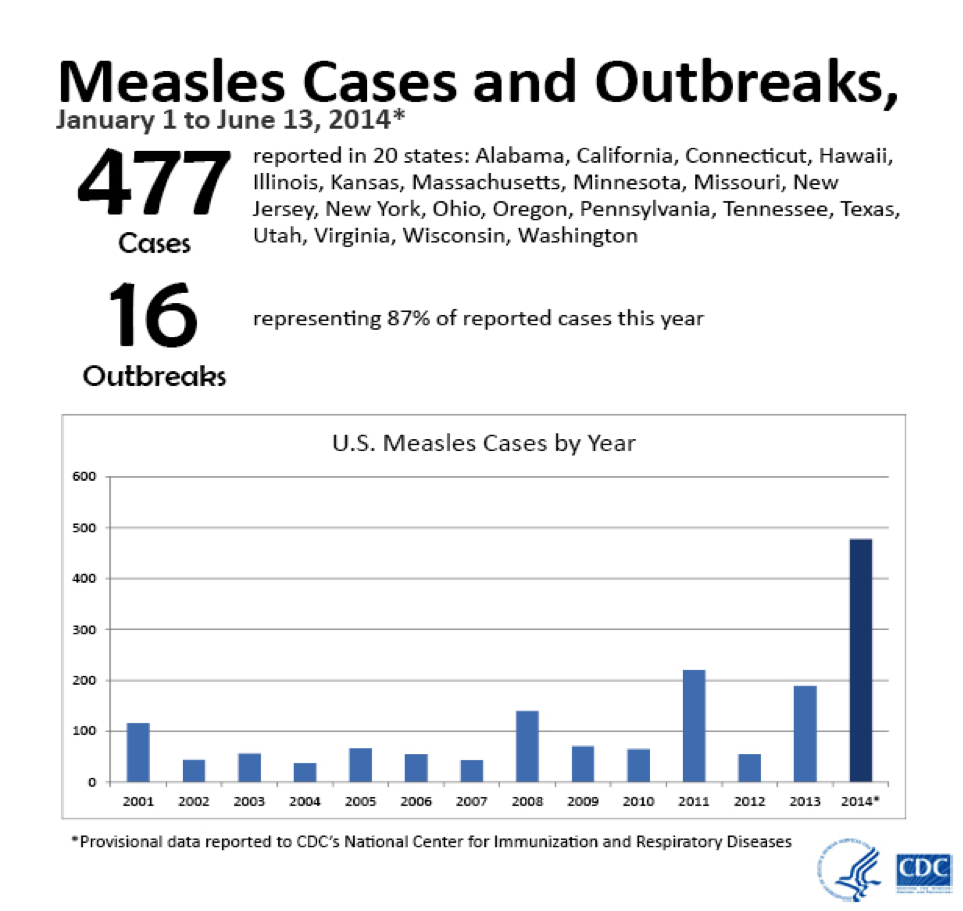
U.S. Measles Cases Soar in 2014

The confirmed cases of measles in the U.S. for nearly the first half of 2014 are already eight times greater than the average number of cases reported each year. The Centers for Disease Control (CDC) confirms 477 measles cases from January 1, 2014 through June 13, 2014, while only about 60 cases of measles are reported in the U.S. annually.

Measles was eliminated in the U.S. in the year 2000 when no new measles cases or outbreaks originated in this country for at least 12 months. This elimination was attributed to highly effective vaccination programs, strong public health systems, and proactive detection and response to measles cases and outbreaks. The elimination means thatmeasles is no longer native to the United States. New measles cases occur, but they are from infected people from other countries.

What is Measles?

Measles is a highly contagious respiratory disease caused by the measles virus. Symptoms include fever, runny nose, cough and a rash all over the body. It spreads through the air by breathing, coughing or sneezing. Complications include diarrhea, ear infections, pneumonia, and death in extreme cases. These complications are more common among children under age 5 and adults over age 20.

Why the Climb?

The CDC reports these contributions to the rise of measles cases:

  • Measles is common worldwide. Travelers continue to bring it into the U.S.
  • Measles is highly contagious. Unprotected and unvaccinated people are at risk.
  • Measles cases put people at risk who can’t get the vaccine due to age or health.
  • Measles cases occur in communities with pockets of unvaccinated people.

2014: The Philippines is currently experiencing widespread measles outbreaks.

2013: The U.S. experienced 11 outbreaks.

2011: France experienced a large outbreak, which spread to the U.S.

2008: Measles spread to communities with groups of unvaccinated people.

Complete elimination of measles requires worldwide community education, proactive vaccination programs, and protecting people who cannot get the vaccine. By eliminating measles from each country, there will be no place where measles can spread. That is why the measles vaccine is important.

measles