National EMS Week

National Emergency Medical Services Week is a time to honor the dedication of those who provide the day-to-day lifesaving services on the front-line of medicine. EMSweek

Top 5 Characteristics that Best Describe Emergency Personnel

  1. Brave
  2. Compassionate
  3. Dedicated
  4. Empathetic
  5. Strong

Whether fighting crime, fires, or being the first to provide care when the need arises – emergency personnel are out there saving lives every day. During times of emergencies, it is easy to forget to show appreciation to the ones who are helping you, so be sure to thank them for their bravery, courage, and dedication!

Noteworthy Nurses!

May 6th – May 12th is National Nurses Week, where we honor our compassionate and courageous nurses.

nurses

The field of nursing wasn’t always a respected or highly recognized career. Here are some of the most famous nurses in history who helped mold the nursing profession into the modern, respected field it is today.

Florence Nightingale- Known as “The Lady with the Lamp,” Florence Nightingale is possibly the most well-known nurse in history. Born into a wealthy British family, the call to nursing was early in her life.  After she completed her training she went directly into the field where she experienced devastating conditions.  Unhappy with the quality of patient care and unsanitary hygiene conditions, Nightingale and her fellow nurses started to tend to the soldiers and set their own standard of care.  It was successful, and she later went on to found her own school of nursing.  To this day, the school’s curriculum has laid the groundwork for modern nursing education. May 12th, 2014 is Florence Nightingale’s 194th birthday!

Clara Barton- Clara Barton may have started her professional life as a teacher and a recording clerk for the U.S. Patent Office, but she soon transformed into quite the humanitarian.  During the Civil war she became known as the “angel of the battlefield” and volunteered countless hours and efforts to helping the sick and wounded soldiers. At the age of 60, she founded the American Red Cross and led the group until 1904.

Mary Ezra Mahoney- The first African-American woman to complete nursing training and become a registered nurse was Mary Ezra Mahoney.  The hospital’s nursing school had 42 candidates, with only four graduates; Mary was one of those four. Mary went into private practice in New England and was an advocate for the rights of all African-American nurses.  She also co-founded the National Association of Colored Graduate Nurses in 1908.

—-

Health care is constantly changing and evolving. Today, more than ever, nurses are stepping out of their comfort zones and becoming active contributors and innovators in the health care system. Nurses are the largest group of health care professionals in the United States, with more than three million nurses in the field.

SOURCE: http://www.rncentral.com, http://www.nursingworld.org

Seasonal Allergies

Tips for Dealing with Spring Allergies

shutterstock_113160949
  • Avoid being outside during high pollen count hours – Pollen count is usually at its highest between 10am and 4pm
  • Use an HEPA (high-efficiency particulate air) filter on your furnace and air conditioner
  • Download the free pollen.com app for your iPhone so you can check what the pollen count is wherever you are
  • If you have pets, wipe their fur and paws after they have been outside to prevent them from tracking pollen into your home.
  • If staying indoors isn’t enough to prevent your allergy symptoms – try taking over the counter allergy medications, such as Claritin, Zyrtec, Allergra, etc.
  • If over the counter medications don’t help relieve your allergy symptoms – consider seeing an allergist who can better help treat your symptoms

Source: www.familydoctor.org, www.pollen.com

What is Sarcoidosis?

Sarcoidois-Awareness-Ribbon

What is Sarcoidosis?

Sarcoidosis is a noninfectious, inflammatory disease.  Although the exact cause is unknown, sarcoidosis is thought to be due to an exaggerated immune response to an unknown trigger or substance the patient encounters.

People with sarcoidosis develop granulomas; small, abnormal clumps of inflammatory cells that cluster together. Although granulomas are most commonly found in the lungs, lymph nodes, eyes, and skin, they can form in almost any organ in the body.  If too many granulomas form in an organ, they can interfere with how that organ functions.

Sarcoidosis is rare, affecting approximately .01% of the population. In the United States, adults between 20 and 40 years old have the highest incidence of sarcoidosis. Women are affected more often than men and this disease is more commonly seen in individuals of African American or European descent.

Sarcoidosis causes different symptoms depending on which body parts it affects.  The lungs are involved in 90% of patients who have sarcoidosis. Symptoms of sarcoidosis in the lungs can include cough, trouble breathing, chest pains, fatigue, fever, and weight loss. Many people with sarcoidosis feel well and don’t have any symptoms at all, making it a difficult disease to detect.

There is no single test to tell if you have sarcoidosis. Medical professionals look at a patient’s history and physical exam findings in combination with imaging studies and tissue samples to determine if a person has sarcoidosis.

Since the cause of sarcoidosis is unknown, there is no cure. Patients with mild cases of this disease do not require any treatment. Frequently, about 50% of the time, people with sarcoidosis experience a spontaneous remission of their symptoms and disease. Patients with more severe cases of sarcoidosis are treated with steroids to relieve symptoms and limit tissue damage. Steroid therapy reduces the body’s immune responses and shrinks the granulomas caused by sarcoidosis.

For more information on Sarcoidosis, please visit the following links:

http://www.lung.org/lung-disease/sarcoidosis/

http://www.stopsarcoidosis.org/patient-resources/what-is-sarcoidosis/


Tips on Reducing Stress

Everyone has stress of some kind in their lives. Review the following tips from the American Psychological Association for ideas to help you manage the stress in your life more effectively.

stress-less

  • Identify your sources of stress. What events or situations trigger stressful feelings for you?
  • Learn your own stress signals. You may feel irritable or experience headaches, muscle tension, or fatigue. Identify any physical complaints you may have that might be linked to stress.
  • Understand how you experience stress. How are your thoughts or behaviors different from times when you do not feel stressed?
  • Recognize how you deal with stress. Determine if you are using abusing cigarettes, drugs, alcohol or food to cope. Is this a routine behavior, or is it specific to certain events or situations?
  • Take a break from the stressor. Give yourself permission to step away from stressful situations. Even taking just 20-minutes to focus on yourself is helpful.
  • Find healthy ways to manage stress. Don’t take on too much at once. Focus on changing a single behavior at a time.
  • Take care of yourself. Eat right, give yourself enough time to sleep, drink plenty of water, and engage in regular physical activity. No matter how hectic life gets, make time for yourself.
  • Exercise.  Exercise benefits your mind and your body. Taking a 20-minute walk, run, or exercise session in the midst of a stressful time can provide relief.
  • Smile and laugh. Laughing or smiling can relieve tension and improve your mood.
  • Meditate. Helps your body to relax and allows your mind to clear.
  • Get social support. Call a friend, send an email. Share your concerns or feelings with another person who understands and validates you.
  • Reach out for support. Accept help from supportive friends and family. If you continue to feel overwhelmed, seek professional help from a psychologist to assist you in coping with and managing your stressors.

For more information visit  www.apa.org

Sports and Concussions

footballbrainThe arrival of spring brings more opportunities for outdoor youth sporting events and activities. Young athletes on the field frequently sustain minor injuries such as cuts, bumps, and bruises. Sometimes, when athletes fall or collide with other players, head injuries occur.  More serious head injuries that affect the brain are known as concussions.

A concussion occurs when an impact causes the brain to move back and forth within the skull. This movement can cause bruising of the brain itself or stretching, tearing or bleeding in the tissues and blood vessels that surround the brain. Patients who have suffered even a mild concussion should be monitored closely as it may take several hours, even days to determine the full effects of a concussion.

After any head injury, observe the individual closely, looking for the following:

  • Any loss of consciousness
  • Impaired physical functioning
  • Behavioral, mood, and personality changes
  • Confusion
  • Forgetfulness or difficulty remembering recent events

Seek immediate medical care for the following signs or symptoms:

  • Dilated pupils
  • Worsening headache
  • Increased drowsiness
  • Nausea and vomiting
  • Slurred speech
  • Convulsions or seizures
  • Significant memory problems or atypical behavior
  • If the athlete “just does not feel right”

An athlete with a concussion needs time to heal and must refrain from sports activities until he or she is fully recovered and symptom free. Injured athletes should be evaluated and cleared to resume their sport by a medical provider.  Repeat concussions can result in long-term problems in an athlete, including permanent brain damage.

To enjoy a safe spring sporting season, young athletes should always wear appropriate safety gear, follow the rules of the game, and avoid reckless or dangerous play.

Benefits of Kite Flying

kiteKite flying is a great way to clear your mind, have fun, and has several health benefits.

1. Eye stimulation – With our constant use of mobile phones and computer screens, our eyes can get tired and unfocused.  Focusing on a distant object against a soothing blue sky can reduce eye strain caused by ever present technology.

2. Neck/Shoulder Exercise – Sitting at a desk doesn’t promote good posture; flying a kite allows us to stretch our neck and shoulder muscles.

3. Stress Reliever – Flying a kite is relaxing.  When watching a kite drift across an open, blue sky, one focuses on the moment, not on the daily stresses of life.

4. Connect to Nature – Being outdoors provides an opportunity to appreciate the natural beauty present in the sky and in surrounding landscapes that is sometimes taken for granted.

5. Fresh Air – Filling your lungs with fresh air can revitalize and refresh.

Acetaminophen Awareness

An Overdose Warning for Acetaminophen

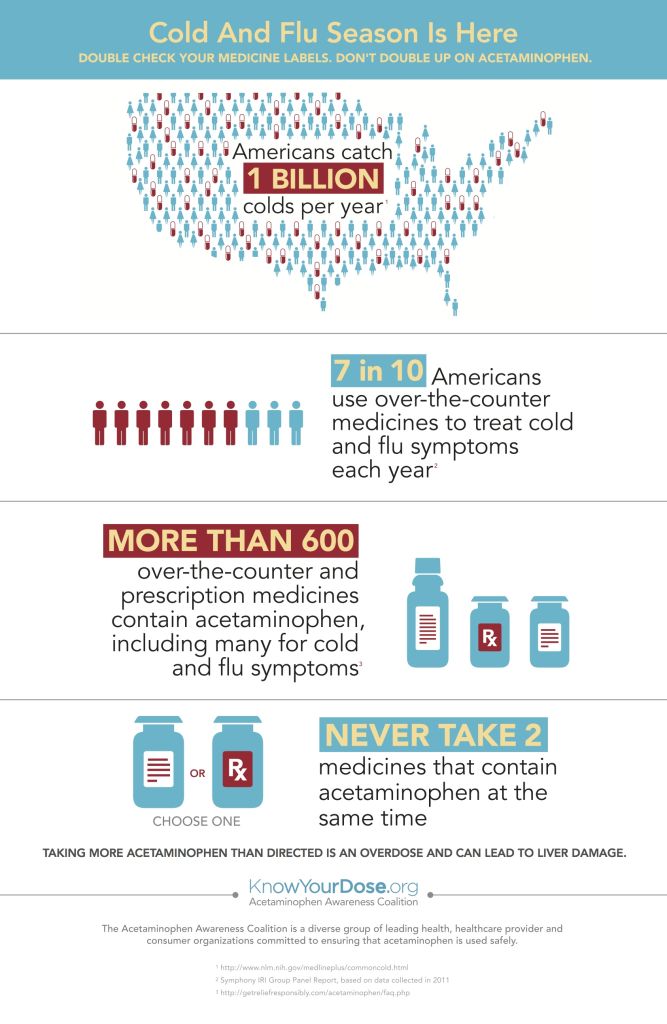
According to The National Institutes of Health (NIH), Americans catch one billion colds each year and about 20% of Americans will contract the flu. Many of the over-the-counter (OTC) medications frequently used to alleviate flu and cold discomfort contain acetaminophen.

Taking OTC medicines containing acetaminophen is so commonplace, but beware that overdosing can cause liver damage; sometimes serious enough to require liver transplantation, or even cause death. You might accidentally take too much acetaminophen if prescription or package labels are not followed carefully, or if you take more than one product that contains acetaminophen.

The current maximum recommended adult dose of acetaminophen is 4 grams (4,000 milligrams) per day. If you have difficulty calculating how much acetaminophen to take daily, ask your pharmacist or healthcare provider to help you. If you have liver disease or consume three or more alcoholic drinks each day, check with your doctor before taking acetaminophen.

Symptoms of acetaminophen overdose:

  • Nausea
  • Vomiting
  • Loss of appetite
  • Sweating
  • Extreme fatigue
  • Unusual bleeding or bruising
  • Pains in the upper right part of the abdomen
  • Yellowing of the skin or eyes
  • Flu-like symptoms

If someone takes more than the recommended dose of acetaminophen and does not appear to have any symptoms, call poison control (1-800-222-1222) and seek medical care immediately. If the person appears ill from an acetaminophen overdose, call 911.

To avoid overdosing:

  • Use only one OTC product containing acetaminophen at any given time.
  • Check if any of your prescription medications contain acetaminophen. If they do, never take any OTC products containing acetaminophen while taking the prescribed medication that contains acetaminophen.
  • Take all medications exactly as directed on the prescription or package label.
  • Do not drink alcohol while taking acetaminophen products.

If you are purchasing an acetaminophen-containing product, and have questions, ask the pharmacist or your healthcare provider for advice.

For more information on acetaminophen, follow the link below:

http://www.nlm.nih.gov/medlineplus/druginfo/meds/a681004.html#skip

 Click on the photo below for an overview on acetaminophen:AcetominophenInfographic copy


Can You Get Sick from Your Pet?

Welcoming a new pet into the home is an exciting prospect for most. Numerous studies have shown that interacting with a furry, feathered, or finned friend can reduce stress, entertain, and provide companionship.

Although it is rare to get sick from a pet, it is possible to contract a bacterial, viral, fungal or parasitic illnesses if proper hygiene measures are not followed. Infections transmitted from animals can cause a variety of symptoms such as muscle aches, flu-like symptoms, diarrhea, skin rashes, and fever. Children under the age of 5, pregnant women, and those with weakened immune systems such as cancer patients, organ transplant patients, and patients infected with the HIV virus have an increased risk of contracting an animal-borne illness.

It is important for all pet owners to learn about various infections that may affect their pets and how these illnesses can be transmitted to humans. Some infections to be mindful of are listed below.

Campylobacteriosis – Campylobacteriosis is a bacterial disease affecting the gastrointestinal tract that is spread through contact with infected feces from puppies, kittens, dogs and cats. Symptoms in humans include mild to severe diarrhea, cramps, nausea and vomiting. Animals do not always appear ill when they have Campylobacteriosis.

Cat Scratch Fever Cat scratch disease (CSD) is caused by a strain of bacteria called Bartonella henselae. Symptoms include a mild infection around a scratch or bite, swollen lymph nodes, fever, headache, fatigue, and lack of appetite. Cats or kittens carrying this bacteria typically do not display any signs of illness.

HookwormHookworm infections are caused by parasites and are more commonly found in younger animals like puppies or kittens. Hookworm eggs pass into animal feces where they can hatch into larvae. If soil contaminated with eggs or larvae is accidently ingested or is tread upon with bare feet, a person can contract a hookworm infection. Symptoms of hookworm can include a painful, itchy skin rash, abdominal pain, or blood in bowel movements. Many individuals with hookworm are asymptomatic.

PsittacosisPsittacosis is a rare bacterial infection caused by the bacterium Chlamydia psittaci. Pet birds, such as parakeets and parrots, are the most common causes of psittacosis in humans, although all birds can carry Chlamydia psittaci. Psittacosis occurs when dried secretions from infected birds are inhaled. Symptoms include fever, chills, headache, muscle aches, and dry cough. Complications from psittacosis such as pneumonia, endocarditis, and hepatitis can be life threatening.

Rabies – Rabies is a potentially deadly viral disease transmitted through the bite of an infected animal. Most states require pets to be vaccinated, protecting them from developing this infection in the event they are bitten by a rabid wild animal. Any individual bitten by a dog, cat or ferret whose rabies vaccination status is unknown or not up to date should consult a medical professional for a comprehensive assessment immediately.

RingwormRingworm is caused by fungi transmitted directly from a pet’s skin or fur. It causes an itchy, ring-shaped rash on the skin. Ringworm can be spread through contact with kittens, puppies, dogs, cats, horses, and livestock animals.

Salmonellosis – Salmonellosis is caused by the bacterium Salmonella. It can be passed to people from a variety of infected pets including dogs, cats, birds, fish, reptiles, amphibians, and rodents. Salmonella spreads through feces, which can contaminate fur, feathers, scales, and environmental habitats such as animal bedding or aquarium water. People handling infected pets or components an infected pet’s environment are at the highest risk of developing Salmonellosis. Symptoms of this illness include diarrhea and fever.

ToxoplasmosisThis is a parasite passed to people through contact with contaminated cat feces. Symptoms include flu-like symptoms, swollen glands, and muscle aches. Pregnant women must avoid all contact with cat feces including cleaning litter boxes. If a pregnant woman develops toxoplasmosis, this infection can infect the fetus causing serious malformations and possible miscarriage.

For complete and detailed information visit:

http://www.cdc.gov/HEALTHYPETS/browse_by_diseases.htm

Tips for protecting yourself against animal-borne illnesses

  • Wear gloves when cleaning up pet waste.
  • Wash hands thoroughly with soap and running water immediately after coming into contact with pet feces or saliva.
  • Clean all scratches and bites from pets with running water and soap.
  • Use antibacterial household cleansers to disinfect counters, sinks, floors, or other surfaces that may have come into contact with pet waste or saliva.
  • Keep your pet’s recommended vaccinations up to date. Discuss what additional ongoing measures are needed to optimize the health of your pet with your veterinarian.
  • If your pet exhibits any signs of illness, take them to a veterinarian.
  • Alert your local animal control agency if you notice stray animals on your property or elsewhere in your community.
  • Avoid walking barefoot outdoors.
  • If your pet is bitten by a wild animal, have them assessed by a veterinarian immediately.
  • Spay or neuter your pets to help reduce the number of stray and unwanted pets
  • Never approach a wild animal. If you are bitten by a wild animal, seek medical attention immediately.

American Heart Month

Join us in raising awareness about heart disease.  

Heart disease is the leading cause of death for both women and men. According to the CDC, about 600,000 people in the United States die from heart disease every year.

The term “heart disease” refers to several different heart conditions. The most common heart condition in the US is Coronary Artery Disease (CAD).  CAD occurs when plaque builds up in the arteries that supply blood to the heart. CAD can cause heart attacks, angina, heart failure, and abnormal heart rhythms.

Heart disease can be controlled and even prevented. Taking small steps towards making better lifestyle choices can make a big difference in your heart health.

  • Eat a healthy diet
  • Maintain a healthy weight
  • Exercise and be active
  • Quit smoking and tobacco use
  • Limit alcohol intake
  • Stress less

Get regular physical exams and discuss with your health care provider whether you have any risk factors that may increase your chances of developing heart disease. Create a plan with your health care provider to actively manage and control any underlying medical conditions you may have such as high blood pressure, high cholesterol, or diabetes.

For more information on heart disease, visit http://www.heart.org/HEARTORG/