American Heart Month

Join us in raising awareness about heart disease.  

Heart disease is the leading cause of death for both women and men. According to the CDC, about 600,000 people in the United States die from heart disease every year.

The term “heart disease” refers to several different heart conditions. The most common heart condition in the US is Coronary Artery Disease (CAD).  CAD occurs when plaque builds up in the arteries that supply blood to the heart. CAD can cause heart attacks, angina, heart failure, and abnormal heart rhythms.

Heart disease can be controlled and even prevented. Taking small steps towards making better lifestyle choices can make a big difference in your heart health.

  • Eat a healthy diet
  • Maintain a healthy weight
  • Exercise and be active
  • Quit smoking and tobacco use
  • Limit alcohol intake
  • Stress less

Get regular physical exams and discuss with your health care provider whether you have any risk factors that may increase your chances of developing heart disease. Create a plan with your health care provider to actively manage and control any underlying medical conditions you may have such as high blood pressure, high cholesterol, or diabetes.

For more information on heart disease, visit http://www.heart.org/HEARTORG/


Winter Safety Tips

Winter Weather Safety Tips

When temperatures are extremely cold, especially with high winds, try to stay indoors. If you must go outside, make trips as brief as possible and use these tips to protect your health and safety:

DRESS WARMLY AND STAY DRY

Hats and heavy scarves are important to decrease the amount of heat escaping from your head. Choose mittens over gloves as mittens are more effective in keeping hands warm. Multiple layers of clothing should be worn, with the innermost layers made of wool, silk, or polypropylene as these fabrics hold body heat better than cotton. Layering clothing traps multiple layers of air against the body, further decreasing heat loss. Try to stay dry because wet clothing will chill the body more rapidly. If you perspire, removing an extra layer of clothing will help keep you dry. Coats should be tightly woven, wind and water-resistant, and have sleeves that are snug at the wrists. Wearing waterproof, lined boots with wool socks are your best bet for keeping your feet warm.

NEVER IGNORE SHIVERING

Shivering is an important first sign that the body is losing too much heat. Persistent shivering is a signal to return indoors immediately. Ignoring early signs like shivering may lead to more serious medical conditions such as frostbite or hypothermia. Tingling or itching skin can indicate frostbite. Slowed body responses and impaired reasoning are signs of hypothermia.

If you suspect mild frostbite or hypothermia, move to a warm and dry environment, remove any wet clothes, and rewarm with blankets. Seek medical attention from your doctor or urgent care clinic if you have any questions or concerns. More severe cases of frostbite or hypothermia need immediate and aggressive treatment in an emergency room.

 AVOID OVER-EXERTION

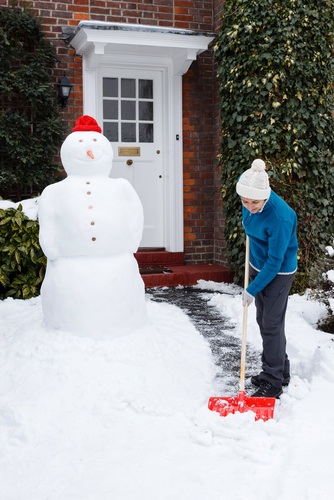
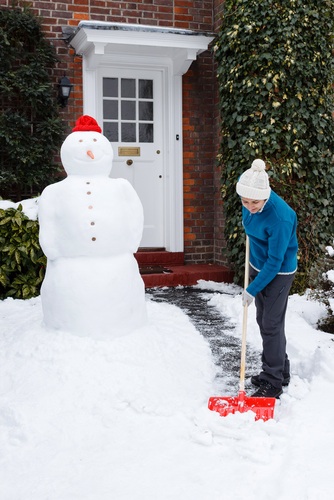
Cold weather puts an extra strain on the heart. If you have heart disease or high blood pressure, follow your doctor’s advice about shoveling snow. Remember, your body is already working hard just to stay warm, so take frequent breaks and don’t overdo it.

  • Warm up your muscles by stretching and walking
  • Shovel small loads of snow at a time and work slowly
  • Bend your knees and avoid twisting your body
  • Keep your back straight and let your arms bear the load
  • Never ignore back or chest pain
  • Watch your step on the ice, sprinkle cat litter or sand on icy patches

TRAVEL AND SAFETY

Ice and snow covered walkways and roadways present challenges while walking and driving. Drive with extreme caution and watch your step in parking lots.

  • When driving, reduce speed and increase the distance between your car and the car in front of you. Avoid traveling on ice-covered roads, overpasses and bridges when possible
  • Have a full tank of gas, keep an emergency kit in your car, and have your cell phone with you
  • If you get stranded, stay in your car, call or wait for help
  • Never walk across a lake or pond that looks frozen
  • Ice skate on safe and tested surfaces only
  • Avoid walking on snow and ice covered roadways and walkways. Use extreme caution while walking near high piles of snow as drivers may not see you
    • Notify friends and family where you will be before you go, especially when participating in outdoor activities such as hiking, camping, or skiing

For more information about winter weather health and safety tips, go to: http://emergency.cdc.gov/disasters/winter/index.asp


Cynthia Vanson, MD

Assistant Medical Director, Urgent Care of Connecticut

Blood Pressure Readings

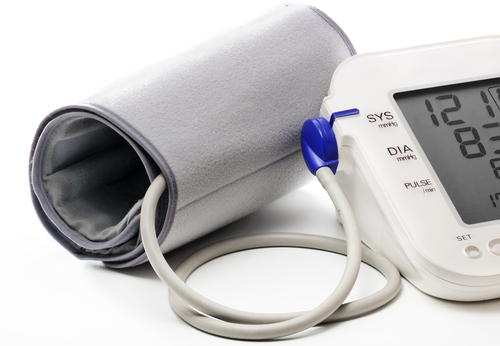
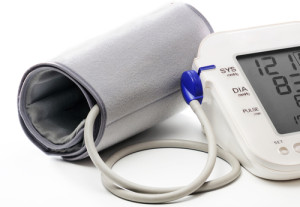
 What do blood pressure readings mean? Blood pressure is measured with an instrument called a sphygmomanometer. The top or “systolic” number measures blood pressure in the arteries when the heart beats and pumps blood out to the body. The bottom or “diastolic” number measures blood pressure in the arteries between heartbeats, when the heart muscle is refilling with blood. An example of a typical blood pressure is 120/80 mmHg. 120 is the systolic reading, and 80 is the diastolic reading. The abbreviation mmHg stands for millimeters of mercury, the unit used to measure blood pressures.

A normal blood pressure is a systolic reading below 120 and a diastolic reading below 80.  Hypertension is the term used to describe blood pressures above 140 systolic or 90 diastolic. Having systolic readings between 120 and 139 or diastolic readings between 80 and 89, indicate prehypertension, and places a person at increased risk for developing hypertension in the future.

Approximately one third of adults in the United States have some degree of hypertension. The following are some common risk factors that can lead to high blood pressure.


 ● A diet high in salt, fat, and/or cholesterol

● Chronic medical conditions such as kidney and hormone problems, diabetes and high     cholesterol

● Family history: You are more likely to have high blood pressure if your parents or other close relatives have it

● Lack of physical activity

● Older age: The older you are, the more likely you are to have high blood pressure

● Being overweight or obese

● Race: Non-Hispanic black people are more likely to have high blood pressure than people of other races.

● Stress

● Tobacco use or drinking too much alcohol

Most people with high blood pressure do not have any symptoms. This is why it’s sometimes called “the silent killer” and why it is so important to have your blood pressure checked regularly. If left untreated, hypertension can damage many parts of the body and increase a person’s risk for stroke, heart disease, and kidney failure.

You can have your blood pressure measured at a local doctor’s office, urgent care facility, hospital, visiting nurse association, and in some retail pharmacies. Sphygmomanometers can also be purchased for in home use.

If your blood pressure is found to be high, getting serious about lifestyle changes such as increasing exercise, smoking cessation and weight reduction can be very effective in reducing, even eliminating hypertension. If lifestyle changes alone don’t drop your blood pressure low enough, your doctor can prescribe medication to treat this condition.

More information on blood pressure and hypertension can be found at http://www.cdc.gov/bloodpressure/